Builder's View, The Next Five Years, Dubai, 2026
The Future of Developers in Dubai, Seen From the Builder's Side
Most lists of Dubai real estate trends read like press releases wearing a crystal ball. The future of developers in Dubai will actually be decided by quieter forces: what product the buyer now expects, where scarcity can still exist, who is allowed to sell, and who keeps answering after handover. Four shifts we are already building inside, told from the side that pours concrete.

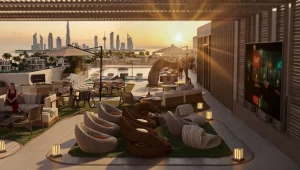
Sheraton Residences Al Marjan Island by Atara, where one of these shifts is already standing.
Shift One: Branded Residences Became a Category
A decade ago a hotel flag on a residential address was a curiosity. Now it is a recognized product class, because the operator's covenant, service levels, and name on the door answer the trust question before the buyer asks it. The next years sort the category into two kinds: flags that operate, and flags that merely decorate. Our move into it was deliberate: the agreement with Marriott International put the first Sheraton branded residences in the GCC on Al Marjan Island, with 168 residences from AED 2.2M on a 30/70 plan, handover Q3 2028.
Shift Two: Coastline Stopped Being Geography and Became Policy
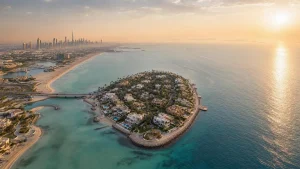
Natural coastline is finished inventory. What comes next arrives two ways: manufactured islands, drawn over years at master-developer scale, and the Dubai 2040 Urban Master Plan, which decides where density and infrastructure legitimize the next districts. The builder's question changed accordingly: not where is land, but where can scarcity still exist in twenty years. We answered it in 2017 with a rule, islands only, one project at a time, and the record of that answer is the Atara Development journey.
Shift Three: The Sale Unbundled From the Network
Dubai built its early market on agency distribution, and the commission layer quietly priced itself into everything. The buyer's question has changed from what are you selling to who exactly am I buying from. Developers with finished proof increasingly answer with their own front door: no brokers, no middlemen, the contract signed by the team that built the address. The mechanics and the honest trade-off sit in our guide to buying directly from a developer in Dubai. It works because it disciplines the seller first: when your own name is the only name on the agreement, the record has to carry the weight. Ours is documented, AED 110 million in H1 2026 villa sales and a 90 percent sell-through, in the press summary.
Shift Four: The Builder's Job Moved Past Handover
A generation of towers taught buyers to ask one question at the end: who answers the phone in year three. Aftercare stopped being a courtesy and became part of the product itself, from defect liability responsiveness to the management standard of shared spaces. The developers who lead the next five years will be the ones who treat handover as the middle of the relationship rather than the end of the sale. Direct-sale structures win this shift by design, because there is nowhere for the responsibility to hide.
What We Bet On
Compressed to one line each: branded residences that genuinely operate, coastlines that cannot be reprinted, sales with the builder's own name on the contract, and aftercare with nowhere to hide. Those are the four shifts we are building into, and they are also the four questions worth putting to any developer competing for your next purchase, ourselves included. Put them to us at the contact desk, and walk the finished proof on the island residences index while you decide.
This is a builder's market view, not a forecast with a guarantee attached. Policy details belong with the cited plan; Atara project details are maintained on our project pages.